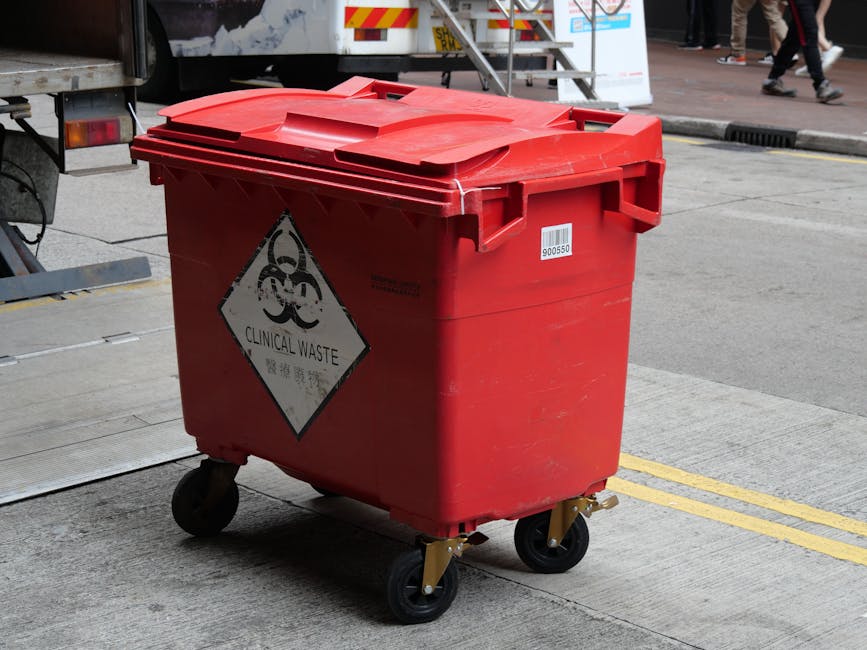
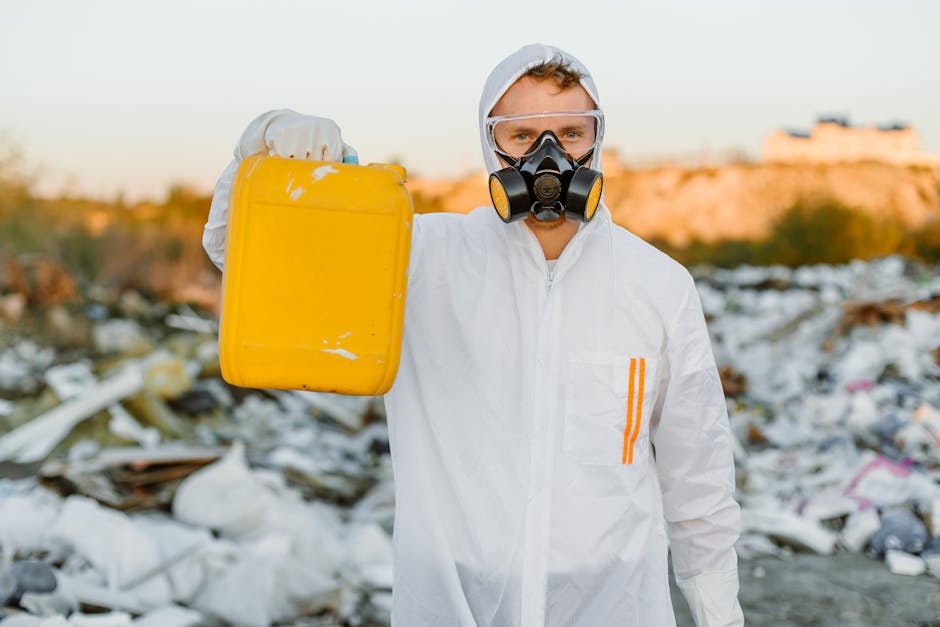
Hazardous waste disposal rules for Kensington cleaning firms
If you run a cleaning business in Kensington, hazardous waste is one of those subjects that can sit quietly in the background until it suddenly becomes urgent. A half-full bottle of strong degreaser, a solvent-soaked cloth, a tub of old bleach, a sharps incident during a clearance job, or a container of contaminated mop water can all turn a normal shift into a compliance headache. The rules around hazardous waste disposal for Kensington cleaning firms are not complicated once you understand the basics, but they do demand care, consistency, and a bit of good judgement. This guide breaks the topic down in plain English so you can handle waste safely, avoid common mistakes, and keep your team, clients, and business on the right side of UK expectations.
To be fair, most cleaning firms do not set out to mishandle waste. Problems usually come from rushed jobs, poor labelling, unclear responsibilities, or someone assuming "it's just cleaning waste, it can go in the bin." That is exactly where things go wrong. Let's make it easier.
Table of Contents
- Why hazardous waste disposal rules matter
- How the disposal process works in practice
- Key benefits and practical advantages
- Who this is for and when it makes sense
- Step-by-step guidance
- Expert tips for better results
- Common mistakes to avoid
- Tools, resources and recommendations
- Law, compliance, standards and best practice
- Options, methods, and comparison table
- Case study or real-world example
- Practical checklist
- Conclusion
- Frequently asked questions
Why Hazardous waste disposal rules for Kensington cleaning firms Matters
Cleaning firms in Kensington work across homes, offices, managed buildings, post-renovation sites, and end-of-tenancy properties. That means waste streams can vary from one job to the next. One morning you may be dealing with ordinary refuse, and by afternoon you may have contaminated cloths, empty chemical containers, damaged aerosol cans, or waste from an after-builders clean that should be treated with more caution.
The core reason these rules matter is simple: hazardous waste can harm people and the environment if it is mixed, stored, transported, or disposed of badly. It can also create problems for your business. Missed paperwork, unsafe storage, and poor segregation can lead to complaints, wasted time, extra collection costs, and in some cases serious enforcement action. Nobody wants that. Especially not over something as avoidable as a poorly labelled drum or a bin bag full of the wrong materials.
There is also a trust angle. Clients in Kensington, particularly landlords, offices, facilities teams, and premium residential customers, expect professional standards. If you can show that your team understands waste handling, risk control, and safe disposal, you immediately look more reliable. That is especially valuable for firms offering office cleaning, after builders cleaning, end of tenancy cleaning, or deep cleaning, where strong chemicals and messy materials are more likely to appear.
Practical takeaway: if a waste item could burn, corrode, irritate, poison, catch fire, or contaminate other waste, treat it as something that needs a proper process-not an afterthought.
How Hazardous waste disposal rules for Kensington cleaning firms Works
The process is usually less dramatic than people imagine. It starts with identification, then segregation, safe storage, documentation, and collection or disposal through the correct route. The details depend on what the waste is, how much you have, and whether it is truly hazardous or simply messy.
1. Identify the waste correctly
Not every used cleaner bottle is hazardous waste. Some items are ordinary household-style waste once fully emptied and uncontaminated, while others remain classed as hazardous because of their contents or contamination. Think of strong descalers, bleach-based products, solvent cleaners, pesticide residues, certain aerosols, sharps, batteries, fluorescent tubes, and contaminated absorbents. If you are unsure, pause and assess. Guessing is expensive.
2. Separate hazardous and non-hazardous waste
You should not mix hazardous waste with general rubbish, food waste, or recyclable packaging if separation is possible. Once different waste types are blended, disposal becomes harder and more costly. In practice, that means keeping a clean system on the van, in the store room, and on site. A firm offering house cleaning or domestic cleaning should still have a plan for the occasional contaminated item, even if most jobs are routine.
3. Store it safely
Hazardous waste should be stored in suitable containers, with lids secure, labels intact, and incompatible materials kept apart. You do not want acids near bleach, or sharp items loose in a general waste sack. A quiet corner in the cupboard is not a storage strategy. It sounds obvious, but a lot of firms learn this the hard way after a spill in a van on a damp Tuesday morning.
4. Keep records and transfer details
In the UK, businesses handling waste normally need proper records showing what was taken away, by whom, and where it went. Exact requirements vary depending on the waste stream and how it is moved, but the general principle is consistent: keep a clear trail. If you cannot show what happened to the waste, you are vulnerable when questions arise.
5. Use the right collection route
Hazardous waste should go to an appropriately licensed or authorised waste carrier and an approved disposal route. For a cleaning company, that often means arranging specialist collection for larger or more sensitive waste streams, while smaller controlled quantities may be managed through a suitable service arrangement. The key is not the volume alone; it is the nature of the waste.
If your team already follows a structured health and safety policy and sensible recycling and sustainability practices, hazardous waste handling becomes far easier to embed. Same habits, just more disciplined.
Key Benefits and Practical Advantages
Good hazardous waste management is not only about avoiding trouble. It also makes daily operations smoother. The benefits are practical, not abstract.
- Cleaner sites: rubbish, chemical waste, and contamination are less likely to spread across a property.
- Safer staff: your cleaners are less exposed to skin irritation, inhalation risks, cuts, and accidental chemical mixing.
- Fewer client complaints: there is less chance of spills, odours, or waste left behind after a job.
- Better compliance confidence: managers know what to do, instead of making a rushed decision in the moment.
- Lower operational waste: fewer mistakes means fewer replacement items, fewer call-backs, and fewer surprise costs.
- Stronger reputation: clients notice firms that work carefully and leave the site tidy.
There is also a mental benefit for owners and supervisors. When the system is clear, people stop improvising. And improvising around chemicals is never a great look. You want calm habits, not heroic guessing.
Who This Is For and When It Makes Sense
This topic matters to more people than you might first think. It is not only for specialist waste contractors. It is relevant to:
- small independent cleaning businesses in Kensington
- larger commercial cleaning teams with multiple staff and vehicles
- domestic cleaners who occasionally encounter contaminated waste
- after-builders and one-off cleaners
- end-of-tenancy teams handling abandoned items, food waste, or broken cleaning products
- office cleaners dealing with batteries, toner, wipes, or broken fixtures
- supervisors responsible for training and safe storage
- business owners trying to tighten compliance without overcomplicating everything
It makes sense to formalise your approach if you ever handle spill kits, bleach, solvent-based products, sharps, broken fluorescent tubes, pesticide residues, or contaminated absorbents. It also makes sense if your team uses more than one vehicle or stores materials off-site. The more moving parts you have, the more valuable a written process becomes.
If your business already uses a clear customer-facing structure for service quality, such as cleaning company standards, trained cleaners, or insurance and safety guidance, waste rules fit neatly into that same professional framework.
Step-by-Step Guidance
Here is a practical way to build a safe, workable hazardous waste process for a Kensington cleaning firm. Nothing fancy. Just sensible steps that people can actually follow.
- List the waste you might create. Start with the products and materials your team actually uses: degreasers, bleach, descalers, aerosols, floor chemicals, oven cleaners, disposal wipes, and any items from special jobs.
- Separate ordinary waste from hazardous waste. Create simple bins or containers for each category so the team is not deciding on the fly.
- Label everything clearly. Use plain labels. Not vague ones. "Used chemicals" is better than a mystery bag marked "misc."
- Train staff on the basics. Show them what to do, where to store items, and who to tell if a container leaks or a sharp item is found.
- Keep incompatible substances apart. Acids, alkalis, solvents, and oxidising products should not be casually stacked together.
- Use secure transport containers. Vehicles should not become rolling storage rooms with loose bottles sliding around the boot.
- Document what leaves the business. Maintain transfer records or job notes so you can track where waste went and when.
- Choose an appropriate disposal route. Match the collection method to the waste type, not just to convenience.
- Review incidents. If a spill, leak, or near miss happens, update your process. Don't just shrug and move on.
A quick real-world example: imagine a late afternoon kitchen clean in a Kensington flat. A strong oven degreaser leaks into the caddy, soaking through paper towels and a cloth. The right move is not to toss everything into general waste and hope for the best. It is to isolate the contaminated materials, prevent further spread, and record what happened. That small pause can save a much bigger mess.
Expert Tips for Better Results
After you have handled a few jobs, the same patterns keep showing up. The firms that stay compliant tend to do a handful of things really well.
Keep your waste system boring
Boring is good here. Boring means repeatable. Use the same containers, the same labels, the same process every time. If every team leader invents their own method, the whole system gets fuzzy.
Train for the messy moments, not the ideal ones
Anyone can follow a process when the waste is tidy and dry. Real life is damp cloths, half-open bottles, and a rush to get the van loaded before the rain starts. Train for that version of the job.
Do a quick end-of-shift check
A 60-second review of the van or store area can catch leaks, missing lids, or contaminated bags before they become a next-day problem. Small habit, big payoff.
Link waste handling to other safety routines
If your team already follows procedures for deep cleaning, one-off cleaning, or office cleaners tasks, add waste checks to the same routine. People remember what is repeated in context.
Keep a spill response kit nearby
Not every incident needs a dramatic response, but a basic kit with absorbent material, gloves, and a container for contaminated waste can stop a small issue becoming a big one. Very unglamorous. Very useful.
Common Mistakes to Avoid
This section is worth reading twice if your team is growing fast or taking on more varied jobs. A lot of disposal problems start with small, avoidable shortcuts.
- Mixing everything together. Once hazardous and non-hazardous waste are combined, you lose control over the stream.
- Leaving lids off containers. Open bottles in vans leak, tip, and smell worse by the hour.
- Using unlabelled bags. Nobody should have to guess what is inside a black sack.
- Ignoring contaminated cleaning cloths. Cloths, pads, and wipes can carry chemical residue.
- Assuming an empty container is always safe. Residue matters.
- Keeping incompatible products together. Some combinations are simply bad news.
- Forgetting record-keeping. If there is no audit trail, there is no defence.
- Training only supervisors. The people on site are the ones making the real-time decisions.
Truth be told, most mistakes are not about bad intentions. They are about being busy. But regulators and clients do not usually care that Tuesday was hectic.
Tools, Resources and Recommendations
You do not need a mountain of equipment to manage hazardous waste properly. What you do need is a sensible setup that reduces confusion.
| Tool or item | Why it helps | Best use |
|---|---|---|
| Clearly labelled containers | Prevents mixing and improves identification | Van storage, site waste segregation, chemical residues |
| Secure lids and closures | Reduces leaks, vapour release, and spills | Transport and short-term storage |
| Simple waste log | Creates a basic audit trail | All jobs with hazardous or borderline waste |
| Gloves and spill protection | Protects staff during handling | When decanting or bagging contaminated materials |
| Segregated bins or sacks | Keeps waste streams apart | Offices, stores, and vehicle loading areas |
| Staff briefing sheet | Standardises decisions | Induction and refresher training |
If your firm also emphasises customer care and transparent working practices, useful supporting pages such as about us, pricing and quotes, and terms and conditions can help set the tone for professionalism. They may not be waste-handling documents, of course, but they reinforce that your business runs on clear standards.
Also worth noting: if your work includes larger clearance-type jobs, house clearance projects often produce mixed waste streams, so it helps to plan ahead rather than sort everything at the kerbside in a rush. That never ends well.
Law, Compliance, Standards and Best Practice
Without turning this into legal homework, the broad UK expectation is straightforward: businesses must manage waste responsibly, prevent harm, and use proper carriers and disposal routes where required. For cleaning firms, that usually means understanding the difference between general commercial waste, controlled waste, and truly hazardous materials. The exact legal duties can depend on the waste type, how it is stored, and whether it is being transported, so if your operation handles unusual or high-risk materials regularly, professional advice can be sensible.
Good practice usually includes the following:
- keeping waste streams separate where possible
- using appropriate containers and labels
- training staff who handle waste or chemicals
- maintaining records for transfers and collections
- making sure contractors and carriers are suitable for the waste being removed
- reviewing incidents and updating procedures
In a Kensington context, this matters because properties can be tightly managed, access can be awkward, and clients often expect things to be neat, quiet, and invisible. A waste spill in a narrow stairwell is not just a compliance issue; it is a client experience issue too. And yes, that counts.
If your business already aligns with a clear health and safety policy and responsible recycling and sustainability practice, you are partway there. The remaining work is mostly discipline, not reinvention.
Options, Methods, and Comparison Table
Different cleaning firms handle waste in different ways, depending on size, job type, and risk profile. Here is a practical comparison of common approaches.
| Method | Best for | Strengths | Watch-outs |
|---|---|---|---|
| Internal segregation only | Low-volume, routine cleaning waste | Simple, low cost, easy to train | Needs discipline and clear rules |
| Dedicated waste storage area | Multi-team or higher-volume firms | Better control and tracking | Requires space and regular checks |
| Specialist waste collection | Hazardous or unusual waste streams | Professional handling and disposal | Can be more expensive and needs scheduling |
| Mixed general waste disposal | Only for non-hazardous waste | Convenient for everyday rubbish | Not suitable for hazardous materials |
In real life, most firms use a mix. A domestic job may only need routine waste controls, while oven cleaning, carpet cleaning, or window cleaning may produce materials that need a bit more care because of product residues, packaging, or contaminated cloths. The trick is matching the method to the job, not forcing every job into the same box.
Case Study or Real-World Example
Here is a realistic example from the kind of situation many Kensington firms run into.
A small team finishes an after-builders clean in a basement flat near the high street. The job involves dust, adhesive residue, paint splashes, and strong cleaning products used to cut through grime. By the end of the shift, they have used cloths, a partially empty chemical bottle, a broken scraper blade, and a few contaminated wipes. The pressure is to pack up quickly, get back to the van, and move on. Classic end-of-day chaos.
Instead, the supervisor stops the team for two minutes. The blade goes into a sharps container, the contaminated wipes are bagged separately, the chemical bottle is sealed and labelled, and the rest of the non-hazardous waste is kept apart. The van check shows one leaking spray cap, which gets fixed before driving off. No drama. No spill. No angry message the next day.
That is what good disposal practice looks like in the real world. Not glamorous, just calm and competent. And honestly, that is what clients remember.
Practical Checklist
Use this checklist before the team leaves a site or closes down the store area for the day.
- Have all hazardous or potentially hazardous items been identified?
- Are chemicals, sharps, and contaminated materials separated from general waste?
- Are containers sealed, stable, and clearly labelled?
- Has any spill or leak been contained and recorded?
- Are incompatible products stored apart?
- Has the waste log or job note been updated?
- Has the van been checked for loose containers or damaged packaging?
- Do staff know who to tell if they find unusual waste on site?
- Have used cloths, pads, and wipes been assessed for contamination?
- Is the disposal route suitable for the waste category?
If the answer to any of those is "not sure," stop and fix it. Quick jobs become expensive when corners are cut.
Conclusion
Hazardous waste disposal rules for Kensington cleaning firms come down to a simple idea: know what you are handling, keep it separate, store it properly, and move it through the correct route. Once that habit is in place, the whole system gets easier. Safer staff, tidier jobs, fewer surprises, better client confidence. All the good stuff.
It does not need to be complicated, and it definitely should not be left to chance. A few clear procedures, a little training, and consistent checks will take most firms a very long way. If you are building or refreshing your systems now, start with the small, practical controls first. They are usually the ones that stick.
Get a free quote today and see how much you can save.
And if your team is already doing the hard work with care, that matters. Keep going. The tidy, thoughtful businesses tend to last.
Frequently Asked Questions
What counts as hazardous waste for a cleaning firm?
Hazardous waste can include strong chemicals, solvent products, contaminated absorbents, aerosols, sharps, batteries, and materials that carry harmful residue. The key question is whether the item could cause harm because of what it contains or has been in contact with.
Can I put empty cleaning bottles in general waste?
Sometimes, yes, but only if the container is truly empty and no longer presents a hazard. If there is residue, pressure, or contamination, treat it more carefully. When in doubt, do not assume it is harmless.
Do domestic cleaning jobs usually create hazardous waste?
Most routine domestic cleaning jobs create very little that is genuinely hazardous, but the picture changes when strong chemicals, broken items, mould-contaminated materials, or spill clean-ups are involved. Small jobs can still produce a messy waste decision.
What should I do with chemical-soaked cloths and wipes?
Keep them separate from normal rubbish until you know how they should be handled. Chemical residue can make cloths and wipes more than just ordinary waste, especially after heavy-duty cleaning or disinfecting jobs.
Do I need special training for my cleaners?
Yes, at least basic training. Staff should know how to identify hazardous items, how to store them, what not to mix, and what to do if a spill or leak happens. A short, clear briefing is better than vague advice shouted across a van.
How often should a cleaning firm review its waste process?
At least periodically, and sooner if your work changes, you take on new products, or an incident occurs. If your team starts doing more after-builders or office work, the waste profile can change quite quickly.
Is record-keeping really necessary for small firms?
Yes. Even small firms benefit from a simple waste log. It helps with accountability, makes collections easier to track, and gives you something to refer to if questions arise later.
What is the biggest mistake cleaning companies make?
The biggest mistake is probably mixing waste streams and hoping it will be fine. That one decision can create safety risks, disposal problems, and extra costs all at once.
How do I handle sharps found during a clearance or tenancy clean?
Do not handle sharps casually. Isolate the area, use appropriate protective measures, and follow your staff procedure. A clear sharps process is especially important during end of tenancy cleaning or house clearance jobs where unknown items may be present.
Do I need to use a specialist waste contractor?
Not for every job, but you should use an appropriate route for the waste type. If the waste is hazardous, unusual, or produced in meaningful quantities, specialist collection is often the safest and simplest option.
How can I make waste handling easier for my team?
Keep the process boring and repeatable. Use the same labels, the same containers, the same end-of-shift checks, and the same reporting routine. People follow simple systems more reliably than clever ones.
Where should I start if my current process is a bit messy?
Start by listing the waste your business actually creates, then separate the obvious hazardous items from general waste and create a simple storage and logging system. Small improvements often make the biggest difference first.